
The Golden Rules: Pre-Wash Prep for Any Jersey
2026-01-19
Before you even think about water and detergent, these three simple rules are non-negotiable. They are the foundation for protecting your investment.
Rule #1: Turn It Inside Out to Protect Prints and Patches
This is the single most important step to protect jersey numbers and logos. Whether your jersey has screen-printed graphics or stitched tackle twill, turning it inside out minimizes friction. The outside of the jersey, with its delicate details, will be shielded from the abrasive tumbling of the wash cycle.
Rule #2: Read the Manufacturer's Care Label
The small tag inside the collar or side seam is your official instruction manual. It will provide specific guidance on the recommended water temperature (almost always cold) and wash cycle for that particular material. Always defer to the care label.
Rule #3: Separate Your Colors
Just like with any other laundry, separate your whites from your colors. Wash your bright team-colored jersey with other similar-colored synthetics. Never wash a pristine white home jersey with a dark-colored away jersey to avoid any risk of color bleeding.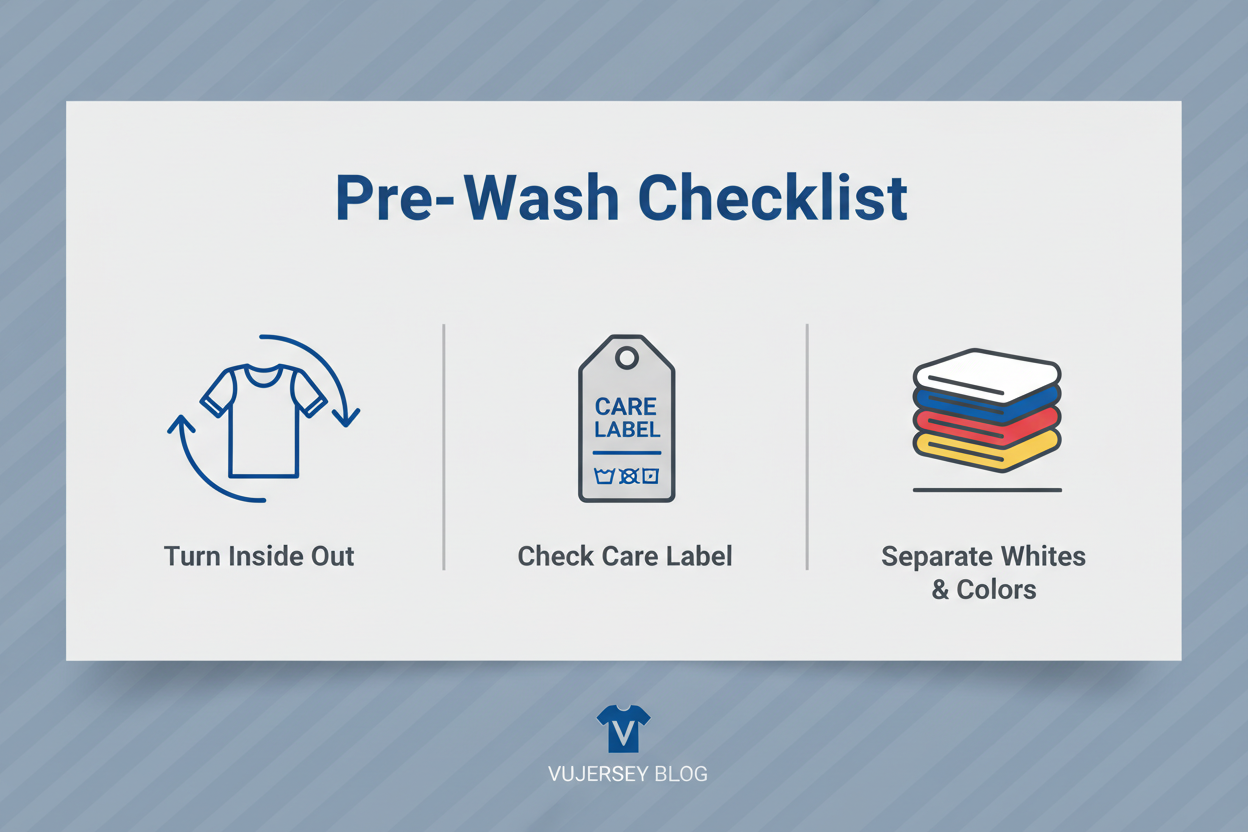
The Step-by-Step Guide on How to Wash a Jersey
You have two safe choices for washing your jersey. Hand washing is always the safest, but a machine wash can be done correctly if you're careful.
The Best Method: Hand Washing in Cold Water
-
Fill a Basin: Fill a clean sink or a small tub with cold water. Hot water can damage heat-pressed graphics and cause fading.
-
Add Detergent: Add a small amount of a gentle, color-safe liquid detergent.
-
Soak: Submerge your inside-out jersey and gently agitate it with your hands. Let it soak for about 30 minutes to an hour.
-
Rinse: Drain the soapy water and rinse the jersey thoroughly with cool, clean water until no suds remain.
The Safe Alternative: Machine Washing on a Gentle Cycle
-
Use a Mesh Bag: Place your inside-out jersey into a mesh laundry bag. This provides an extra layer of protection against snagging and friction.
-
Select the Right Cycle: Choose the "Delicate," "Gentle," or "Hand Wash" cycle on your machine.
-
Cold Water ONLY: Double-check that your machine is set to wash with cold water.
-
Use Mild Detergent: Use a small amount of a gentle, color-safe detergent.
-
Wash with a Light Load: Wash the jersey with a few other lightweight synthetic items, like t-shirts. Avoid washing with heavy items like jeans or towels.
The Crucial Step: How to Dry Your Jersey Without Damage
This is where most jersey catastrophes happen. Do not use a machine dryer.
Why the Dryer is Your Jersey's Worst Enemy
The high heat from a tumble dryer is the number one killer of sports jerseys. It can melt the adhesive on screen-printed numbers, causing them to crack and peel. It can also damage stitched patches and even shrink or warp the fabric itself.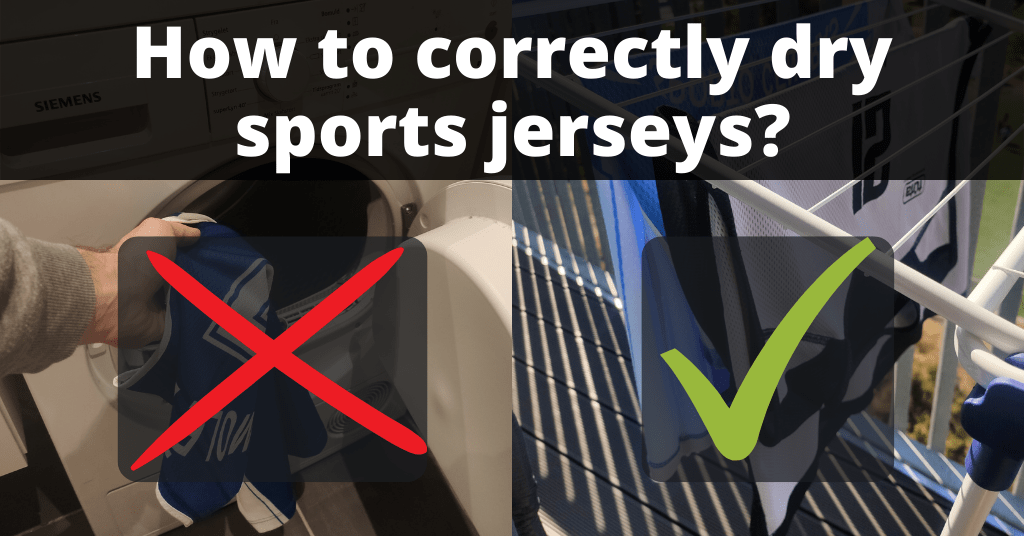
The Only Safe Way: Air-Drying on a Hanger
Once the jersey is washed, gently squeeze out the excess water—never wring or twist it. Then, immediately place it on a plastic (not wood or metal) hanger. Hang it in a well-ventilated area away from direct sunlight to air-dry completely. This is the only way to guarantee your prints and patches remain intact.
League-Specific Tips: NFL, MLB, and NHL Considerations
While the golden rules apply to all, each league's jerseys have unique characteristics.
For NFL jerseys: Protecting Stitched Twill Numbers
For higher-end jerseys with stitched numbers (like Nike's Limited tier), turning them inside out is crucial to prevent the stitching from snagging on other items in the wash.
For MLB jerseys: Dealing with Dirt and Grass Stains
Baseball jerseys, especially white ones, are magnets for dirt and grass stains. It's essential to spot-treat these stains before washing. A small amount of detergent or a specialized stain remover applied directly to the spot can make a huge difference.
For NHL jerseys: Washing Heavier, Multi-Layered Fabric
Hockey sweaters are made of a heavier, more complex fabric. They may require a slightly longer soak time during hand washing to ensure they are fully cleaned. Due to their weight, ensure they are hung on a sturdy hanger to dry so they don't stretch.
Pro Tips for Stain Removal and Odor Control
A few extra tricks can keep your jersey in game-day condition.
Spot-Treating Stains Before the Wash
For any stain, act quickly. Gently blot (don't rub) the area and apply a small amount of mild detergent directly to it. Let it sit for 15 minutes before washing as normal.
Using White Vinegar to Eliminate Odors
If your jersey has lingering odors from a tough game, add a half-cup of distilled white vinegar to the soak water or the rinse cycle of your machine wash. It's a natural and safe deodorizer that won't harm the fabric.
Keep Your Colors True, Season After Season
By following these simple steps, you can conquer laundry day and ensure your favorite jersey lasts for years.
Your 3-Step Mantra: Inside Out, Cold Wash, Air-Dry
If you remember nothing else, remember this. This simple process will solve 99% of jersey care problems.
Ready to Grow Your Worry-Free Collection?
Now that you know how to keep your jerseys in perfect condition, you can without fear. It's time to add another piece of history to your wardrobe.
FAQ: Your Top Jersey Care Instructions Questions
Here are answers to a few more common questions.
Can I use fabric softener on my sports jersey?
No, you should not. Fabric softeners can leave a residue that clogs the pores of the technical polyester fabric, which can trap odors and reduce its moisture-wicking capabilities.
How do I fix numbers that are starting to peel?
For minor peeling on screen-printed numbers, you can try placing a piece of parchment paper over the number and pressing it with an iron on a very low heat setting for a few seconds. This can sometimes reactivate the adhesive. Do this at your own risk.
How often should I wash my jersey?
If worn for athletic activity, wash it after every use. For casual wear, washing it after 2-3 wears is usually sufficient, unless it gets stained.
What's the best way to store my jerseys?
The best way to store jerseys is on a plastic hanger in a closet. This prevents wrinkles and stress on the fabric. For long-term storage, a breathable garment bag is a great option.